
Read From the Beginning

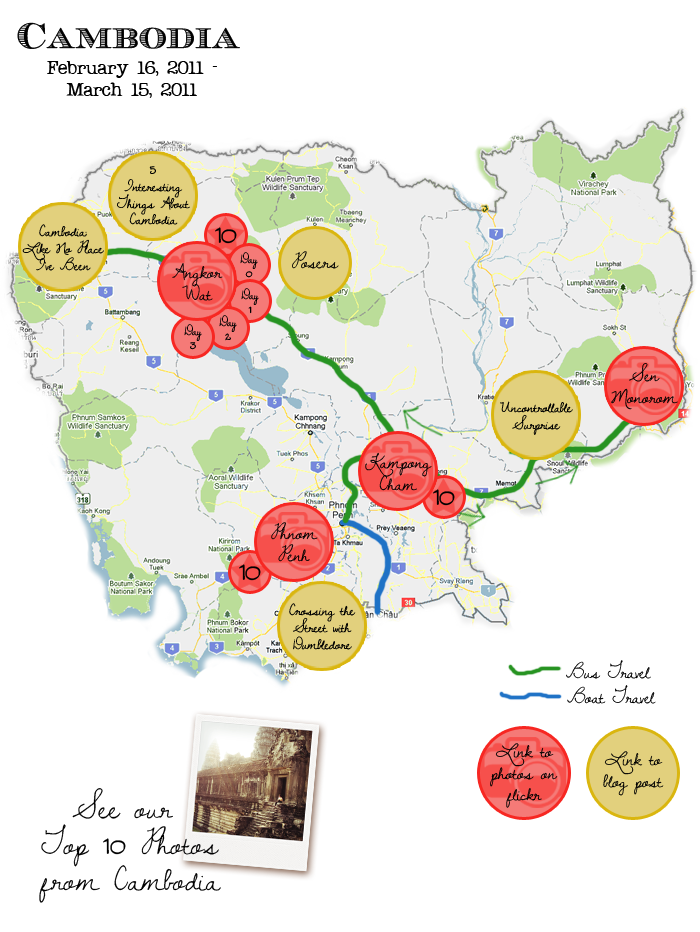
Since we were in Vietnam for so long, I've decided to split my scrapbook in two. Here's the first volume:

“Cambodia is like Australia.”
I had been sitting on a boat in the sun all day, coming up the Mekong from Vietnam, and all those rays were making my senses feel a little bit baked. I couldn’t be quite sure if the words I thought I heard came from inside or outside my head.
“Come again?”
“Cambodia is like Australia,” Rob repeated. “People are super laid back here, and friendly. They work hard—really hard—but they know how to kick back and relax hard too, at the end of the day. I love it.”
Rob, an Aussie himself, has been living in Phnom Penh for the last several months, where he unexpectedly set up house after cycling his way up from Singapore on a recumbent tricycle and deciding not to leave. We connected through CouchSurfing.org, and he generously offered to host Marisa and I while in Cambodia’s capital… which is how I came to be sitting on his couch nibbling sweet mango while he compared the Southeast Asian nation I had just crossed into with his homeland down under.
I’ll admit that the comparison caught me by surprise. I didn’t know much about Cambodia before visiting, but the little I knew about the Khmer Rouge regime dominated my mental image: I pictured a country under a dark cloud, devastated and depressed, struggling to recover from untold horrors. Australia, on the other hand exists in my mind as a rather more happy and sunny place.
I still haven’t been to Australia, but after four weeks in Cambodia I can say that the people we’ve encountered here have indeed been incredibly laid back and friendly. People seem to smile with their whole faces on a more regular basis than I remember them doing elsewhere, and this, along with the constant performing of sampeah (bowing with palms together) creates a disarming effect. The sampeah came naturally to me (probably because of all the bowing I did while in Korea), and I caught my smile getting constantly broader under the barrage of friendliness. Soon I found myself entering into easy conversation with all kinds of people: with a woman selling cane juice by the side of the path on a rural farming island outside of Kompong Cham, who taught me several words of Khmer through signs; with a shop vendor who turned out to also be a high school teacher studying English when and where he could—we had a forty-five minute dialogue about our two countries and exchanged emails at the end of it; with Sa Vorn, our tuk-tuk driver in Angkor—a hard-working man who exudes honesty and trustworthiness… and with many others. One highlight was dining with Rob along with his Cambodian fiancé’s family, his future brother-in-law chatting away with us vigorously in pigeon English, alternating questions, jokes, laughter, and directives to “eat more frog legs!” faster than we could keep up (the frog legs, fried with lemon grass and chili, were delicious).
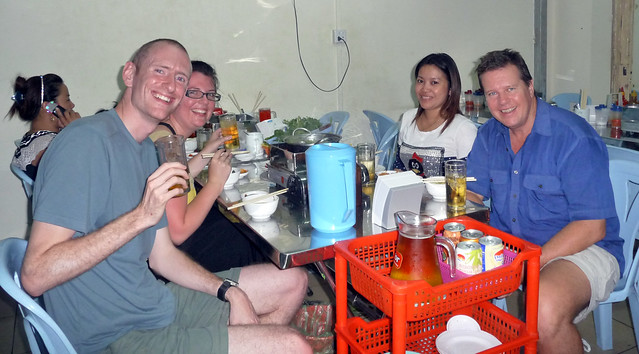
Dinner with Rob and his bride-to-be (before other family members showed up).
So what of the dark cloud? What of the Khmer Rouge? As I learned more about the regime I was shocked to discover that the horror was—if anything—worse than I had previously imagined. In the four years that “Red Khmer” controlled Cambodia, over two million people died from starvation, torture, and brutal killings—a full quarter of the country’s population at that time—making the period deadlier on a per capita, per nation basis than the American Civil War or the Rwandan Genocide.
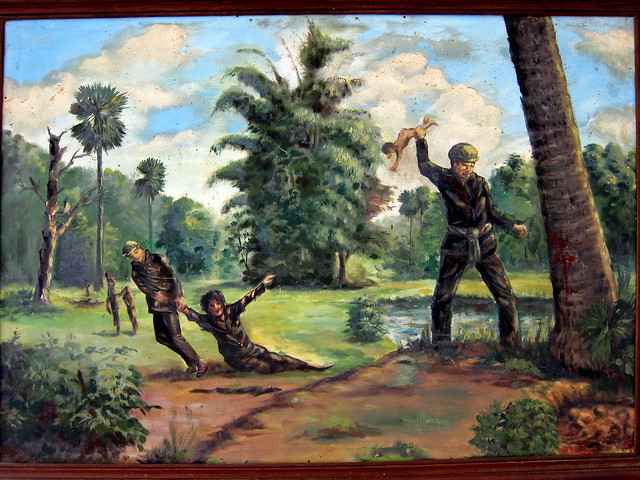
An image painted by one of the few S-21 prison survivors.
Pol Pot’s communist “revolution” was the most radical ever attempted, making the Soviet and Chinese programs look sensitive and gradual by comparison: in 1975 all foreign ambassadors were evicted, schools and hospitals were closed, banking, currency, and private property were abolished, and religion, romance, and family loyalty were outlawed in one fell swoop without any kind of gradation schedule. Cities were turned into ghost towns as residents were driven into the countryside to perform fieldwork, where they were expected to produce incredible rice yields on meager rations (though many of them were lacking the most basic agrarian knowledge). Power was placed in the hands of the “pure” peasants and children, who were taught to obey all orders and use force indiscriminately, while former city dwellers and “educated elite” were considered corrupted beyond redemption, and thus expendable (excepting party leaders like Pol Pot, who were generally the best-educated of all).
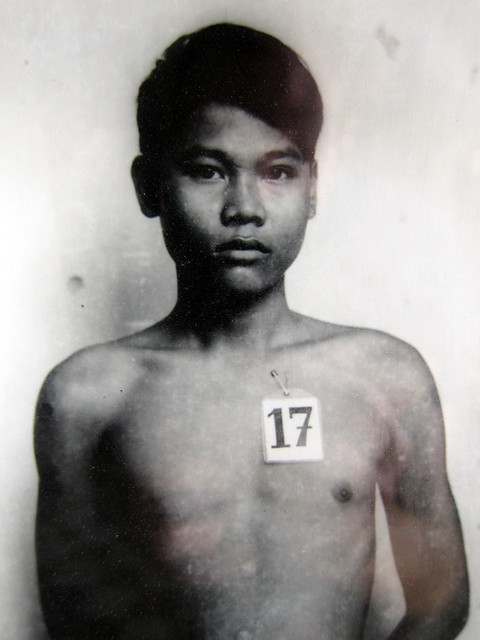
One boy who was arrested then tortured and killed at S-21.
This was the high point of the regime. As the city dwellers failed to produce great quantities of rice, everything got worse. Rations were decreased below starvation level while work hours were prolonged, and violence escalated. Pol Pot, unable to believe that his revolution could fail, suspected corruption within the party. Cadres and lieutenants were arrested and sent to Security Prison 21, where they were tortured until they confessed to working for the KGB, CIA, or Vietnamese government. Then they were asked to name fifty more conspirators (who were predictably brought in next) before they were taken to the killing fields. Their wives and children, charged “guilty by blood,” were also killed (the children usually by beating their heads against trees). These killings were mostly carried out by "pure," barely adolescent teenagers. In the countryside the educated were asked to step forward for “forgiveness,” then beaten to death, while everyone everywhere starved. If the Khmer Rouge had not antagonized Vietnam to the point that the Vietnamese army invaded in 1979 to topple the regime, it is likely that the Cambodian population would have been totally exterminated within a matter of two or three more years, Pol Pot left alone in his utopia, atop a monstrous pile of skulls.
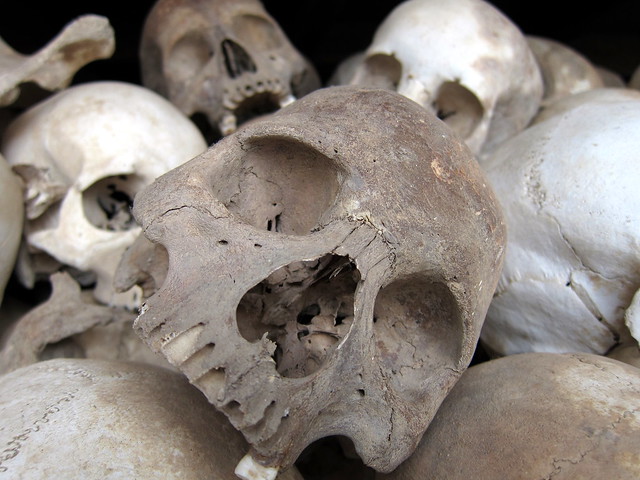
Skulls of victims at the Choeung Ek killing fields.
This is what the kind, smiling, laid back people here have been through. Since the deadly regime was toppled things have been infinitely better in the sense that people aren’t dying by the thousands, but in many ways Cambodia is still in the early stages of recovery. It took decades to rid the country of the last Khmer Rouge insurgents (whom the American government supported gainst the Vietnamese into the 1980s, and who were active into the mid-90s), and the country is still littered with millions of land mines laid to keep those insurgents at bay. Despite a UN attempt to promote fair elections in 1993 the current government remains an offshoot of the one installed by the Vietnamese in 1979, rather than the people’s choice, and is largely irresponsible and unresponsive, making little attempt to meet its nation’s basic health and education needs, relying instead on foreign aid (much of which seems to vanish as it enters the country). Corruption is rampant and widespread (with Transparency International ranking the country in the bottom 1% in their worldwide corruption index). Many former Khmer Rouge leaders and cadres are in powerful positions in the current government, and many more live ordinary civilian lives, having never been asked to account for past deeds. In 2006 an international tribunal was established to try the most senior KR leaders, but it has met with numerous bumps in the road, and only one person has been convicted to date, with their sentence now being appealed.
After the bows and the smiles and the gracious hospitality, these realities did come out in my discussions with Cambodians. In hushed tones people asked me if I had visited Choeung Ek, then explained how they were attempting to process the horrors of their country’s past. “How could this happen?” They asked me. “And why?”
As if I could provide any answers.
“This past is not taught in our schools,” said Sa Vorn gravely, before going on to tell me of Cambodia's widespread corruption and how it affected his job, along with other grievances he had with the government. Then he smiled, picked up the English grammar book that he spends all his spare time studying, started up his tuk-tuk, and drove us on to the Bayon… one of Angkor’s largest and most impressive temples, built by Cambodia’s most beloved King at the height of their empire’s splendor. The sun was just rising, and there was not another soul in sight.
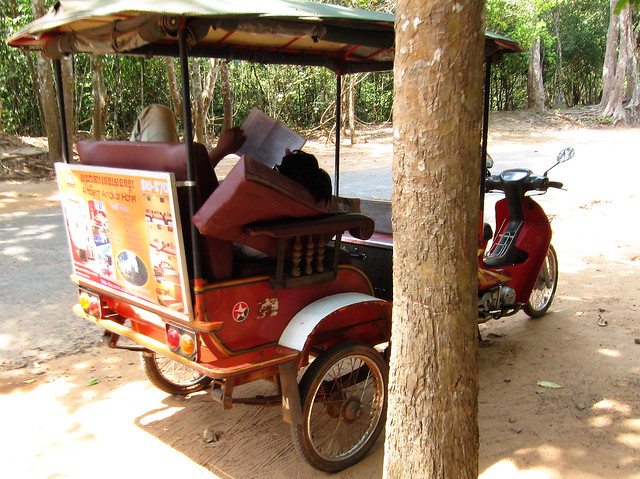
Sa Vorn, studying his English while he waits for us at a temple stop--no kidding, that's a grammar book.
And this has been my experience of Cambodia. Learning about one of the worst autogenocides in human history while interacting with some of the nicest, most laid back people I’ve ever met, in the shadow of a staggeringly majestic bygone era. I don't know if Cambodia is like Australia, but it certainly isn't like any place I've ever been.
This, again, is why I travel.
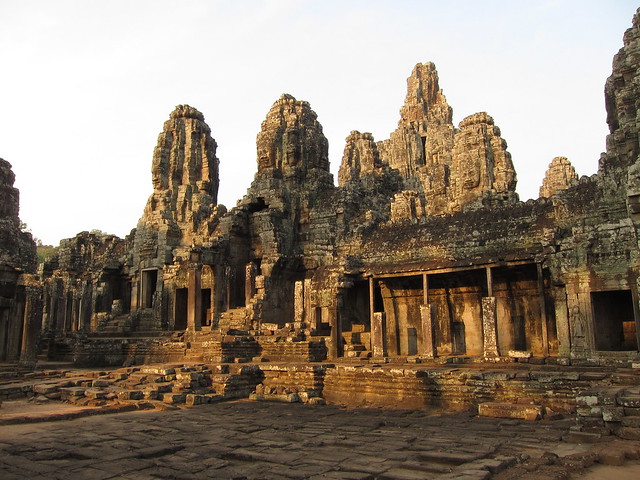
The Bayon at sunrise.
Related slideshows:
Bonus! A few interesting facts about Cambodia:
- Buddhism is the professed faith of 95% of Cambodia's population, which is the highest percentage of Buddhist believers in the world (tied with Thailand). All Cambodian men over the age of sixteen are expected to serve some time as monks as a kind of right of passage.
- Cambodia's chief cultural influence is India, rather than China.
- Unlike neighboring languages like Thai, Lao, and Vietnamese, Khmer is a non-tonal language.
- While Cambodia has its own currency (the Cambodian riel), its use is limited mainly to pocket change, with the country's main legal tender being the US dollar (which all ATMs dispense--at amounts up to $2000 per go!). Generally you pay for things in dollars, and get any change less than $1.00 back in riel.
- Cambodia is the cheapest place in the world to buy certain electronics, notably Apple products, high-end cameras, and other items with relatively determined retail values. Prices are typically equal to their counterparts in the United States (where electronics are still cheaper than most "hyped" locations in Asia due to market differences), but have the advantage of being completely untaxed to everyone.
- Cambodians like their beer with lots of ice. Which of course makes sense for a country with Cambodia's climate.
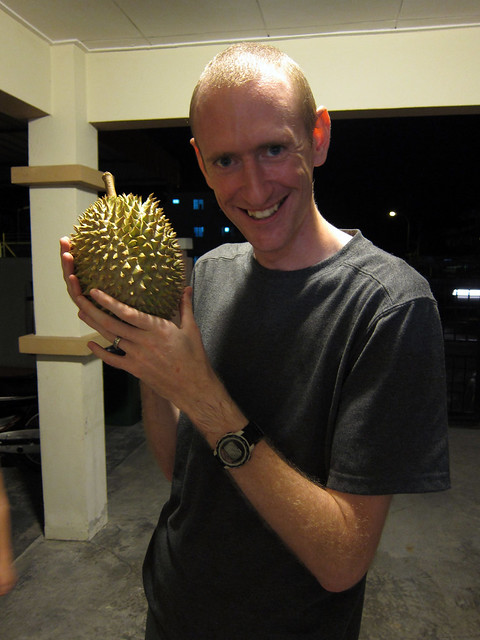
Today we ate Durian. Durian is touted as being very stinky. I have heard that hotels ban the fruit because it is too stinky. Perhaps containing it inside a room would make it extra stinky. We ate it outside and I have to say, if you think that's stinky, you really haven't smelled very much.
Most stinky thing ever: That time when we thought an animal died in the air conditioner. Dad was inspecting it and about to pull it apart when we realized it was just the neighbors cooking dinner.
Stinky rule #1: If it doesn't smell like something died, it's not really that stinky.
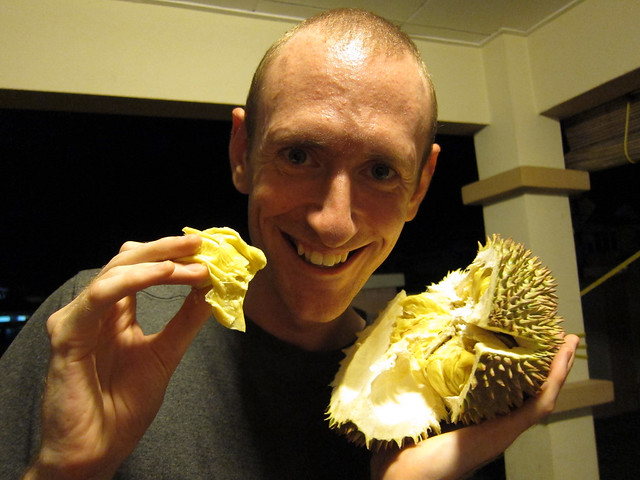
Korea is full of stinky food. They like to let things sit around, rot and then eat them. They liken this to cheese.
Stinky rule #2: If cheese smells like that, don't eat it. Or anything else.
A great day in Korea was the day I had revenge on everyone who fed me weird stuff. It was honest enough because I didn't realize at the time that dill pickles tasted funny. However, I guess if you've only ever eaten sweet pickles, a dill pickle would taste funny. We fed the dill pickles to Jordan's students. The students made shocked faces. I felt strangely satisfied. That was for all the fermented bits, the mysterious sea animals and giant mushrooms that I ate.
People love their stinky food. You can be sure that whatever country you visit, whatever is stinkiest will be a national treasure and someone will be very pleased to make you eat it.
Stinky rule #3: When someone says, "this is a special food," run the other way.
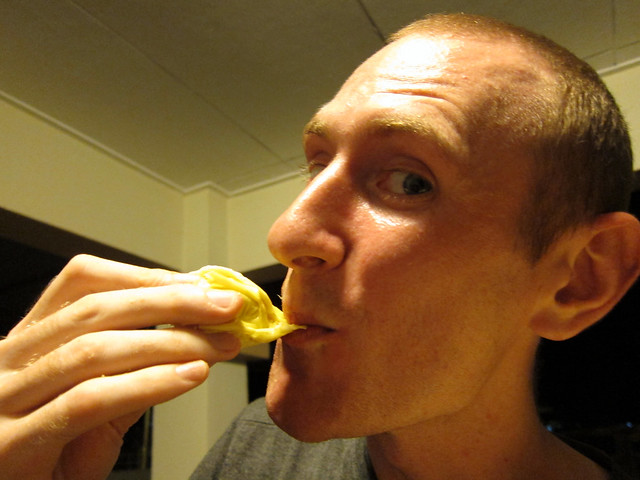
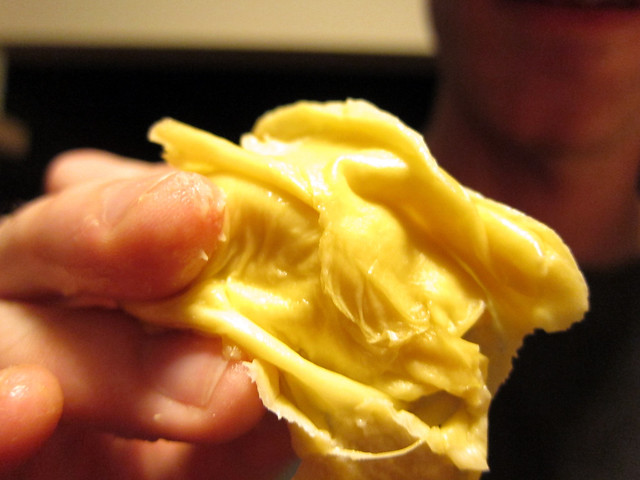
It should be noted that I too ate the Durian, just not as much as Jordan. It should also be noted that while the Durian is not the stinkiest, it is still quite slimy and tastes more like something I would rather not eat than something I would.
Yesterday we visited the Aviary in Kuala Lumpur. It was a very nice place. Also it is the world's largest aviary. We saw a lot of birds.
At one point we walked past a photo booth where you could get your picture taken with a variety of birds. There were some very cool owls that I was interested in getting my photo with, but it was unclear if the price included the owls or just the big parrots.
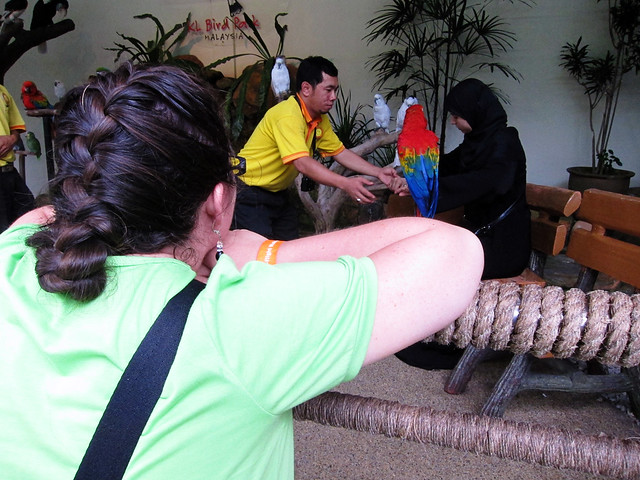
So we walked on and the next stop was the "Parrot Experience." Sounds promising. When we entered there was a guy at the door selling parrot food if you were interested. I am always interested in feeding the birds, and since the price was considerably lower than getting your picture taken with owls, it promised to be my excitement for the day. And I sure got some excitement; a bit more than I paid for I think.
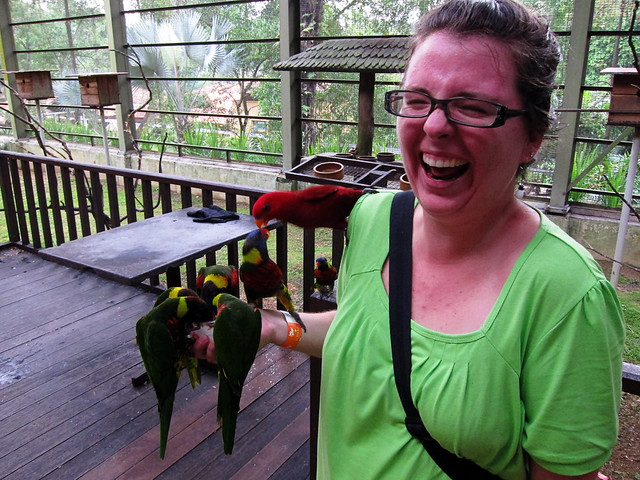
After getting my cup of what looked coconut water, I unsuspectingly walked a bit into the Parrot Experience room, thinking I would get to pick out the bird I liked the best to feed. However, instead I was suddenly covered in parrots that flew in from nowhere, having been watching my cup of food a lot more closely than I was watching them.
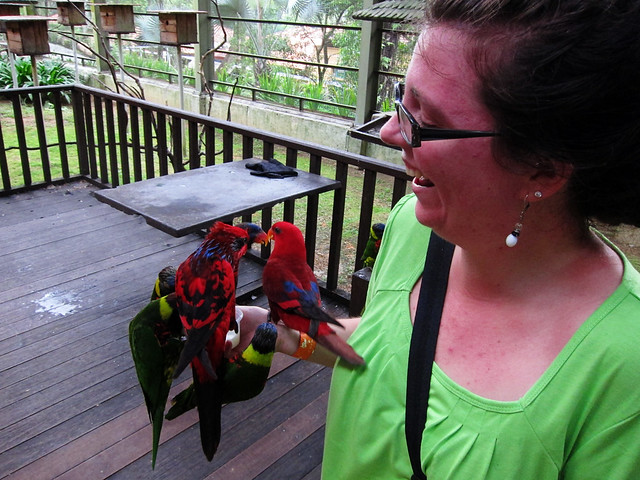
Animals are rarely as nice as we think they are and here you can see the birds fighting over who gets a spot at the cup.
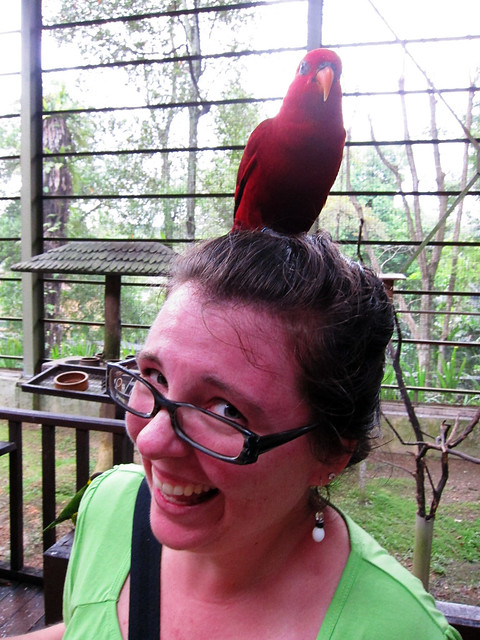
This one is keeping an eye on things from a nice perch.
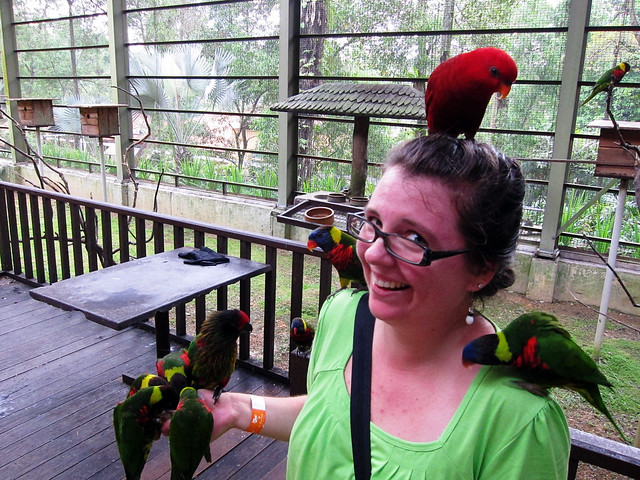
Some more flew in to keep an eye on the action.
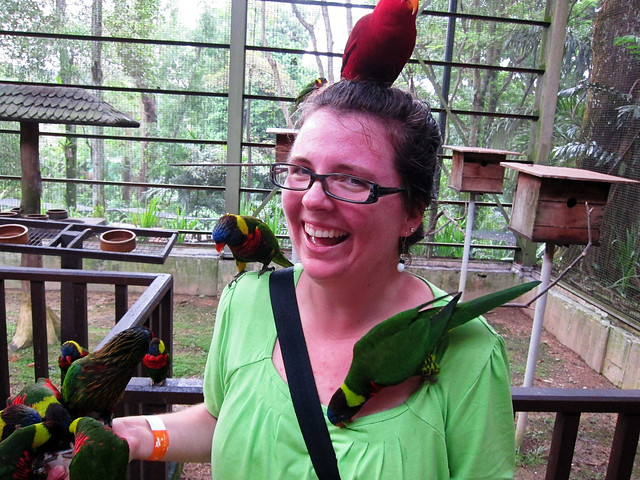
This one is not actually trying to eat my shirt, but using it so that he can climb closer to the action.
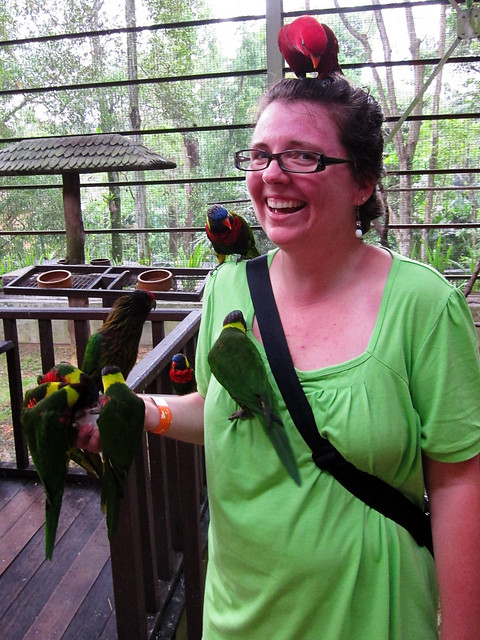
See how he is making some progress.
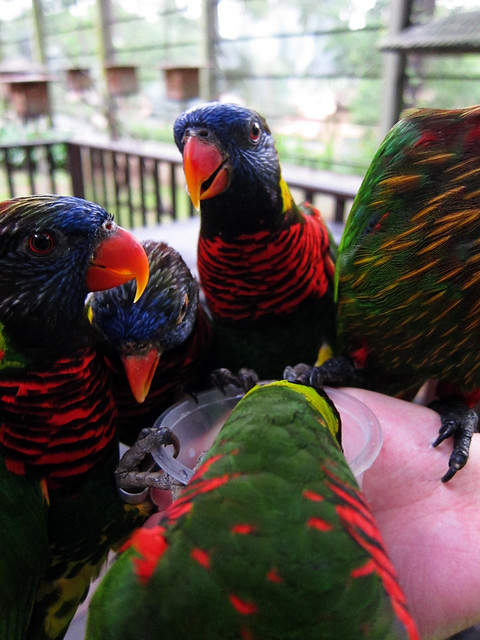
Mysterious white liquid sure is delicious.
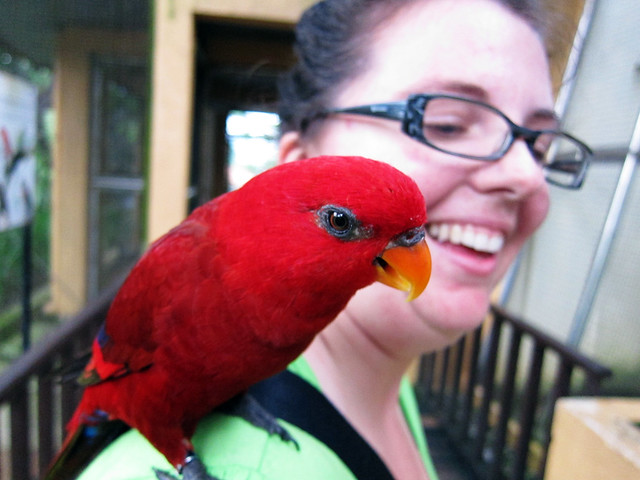
This guy sat on my shoulder and was perhaps trying to keep the rest in line because he kept making loud bird noises right in my ear.
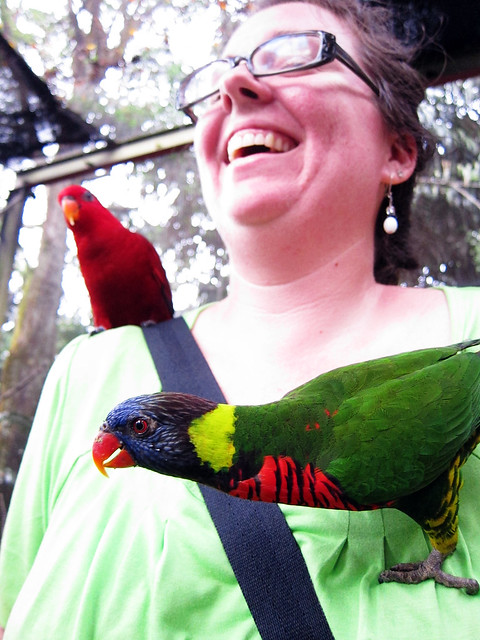
This one really thinks I'm a tree for climbing.
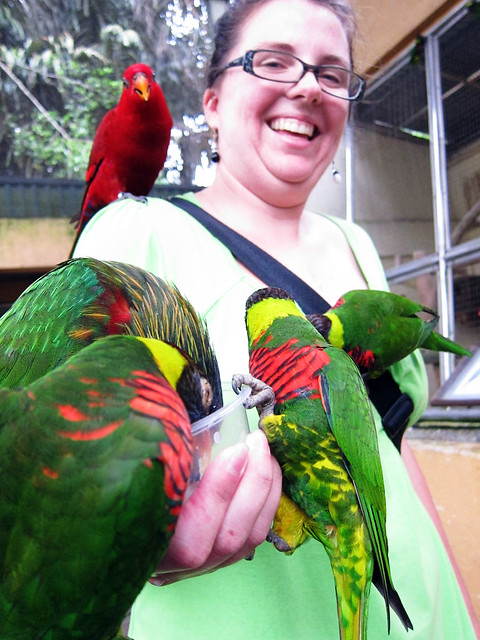
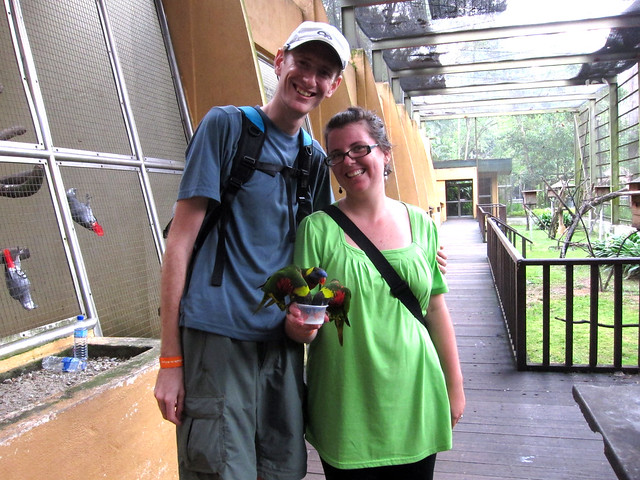
When all the excitement died down, we got a more composed picture together. During the frenzy the birds also thought Jordan was a tree and perched on his head as well. However, since I was covered in parrots and couldn't reach in my pocket for the camera, you'll just have to imagine that.
It turns out fried chicken is really delicious. That's why people eat it all the time.
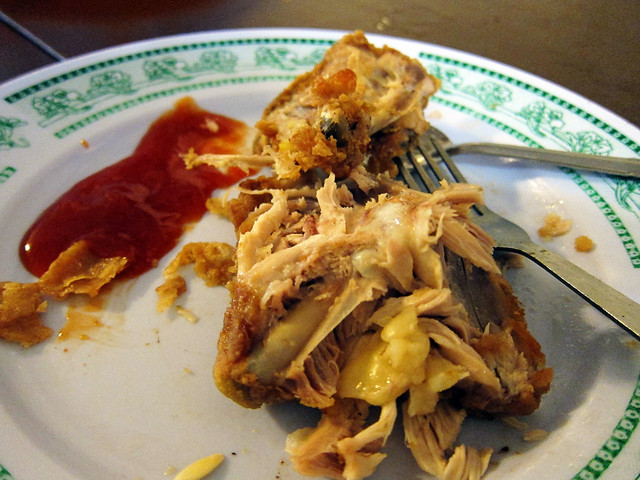
Also, a side note, it's really hard to do consistent food photography because sometimes (mostly) you eat the food and then realize you should have taken a picture.
Moral of the story (#48): Sometimes you have to go to new places to learn something you already knew (or should have).
I have "finished" the somewhat pathetic second half of my Vietnam scrapbook. It's rather short, you can check it out below. A bunch of things conspired to make it less than exciting. However, I'm working on my Cambodia book right now and it is much more impressive. So you have that to look forward to :).
Waking up in the village of Sungai Batu, at the Southern tip of Pulau Pinang, Malaysia, is the same every morning: you wake up with the sound waves that call the faithful to prayer. The prayer, if you are not Muslim, is optional, but the waking up is not: Sungai Batu is small, and every bedroom in every residence inside the village lies within easy striking distance of the loudspeakers mounted on the central mosque's minaret.
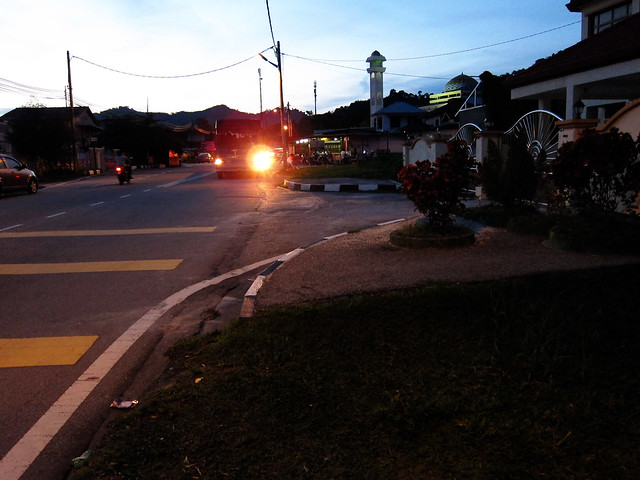
Sungai Batu at sundown.
And so it was for us, every day for a week. Then something odd happened, on the last day of our stay. That morning, as the final verses of the Adhan faded and I rolled over to renew my slumber, another sound caught my ear... a strange sound... a sound that seemed to clash with the first. I sat up, and turned my head to listen. It seemed as if this new sound were also coming from the mosque, just as the call to prayer had done... except... except...
Except the sound was the sound of Justin Bieber's voice, singing "baby, baby, baby, oh!"
I am the kind of person who easily waxes nostalgic for times gone by... I romanticize bygone eras of exploration and discovery, and allot most of my daydreaming time to imagining myself as a daring globe-trotting archeologist born about two hundred years ago.
I also indulge my nostalgia with literature. As I traveled through Malaysia, for instance, I spent some time reading a bland contemporary account of the overarching history, but spent a good deal more time lost in the pages of a nineteenth century travel diary penned by a woman named Isabella Lucy Bird. Not content with the expectations for her gender in Victorian England, Isabella set out with her "Gladstone bag and canvas roll" to visit America when she was twenty-five, and spent the rest of her life crisscrossing the globe, from Morocco to India, Turkey to Japan. She ended up funding her adventures by publishing her detailed letters and diaries, which remain some of the most insightful travel writings available from the period.
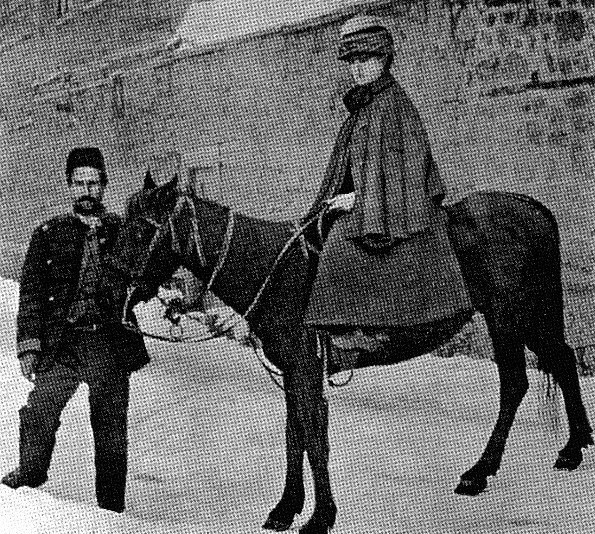
Isabella Bird photographed in Tibet, a few years after she traveled Malaysia.
When Ms. Bird came to Malaya by steamer in 1878, British colonies had been established on the islands of Penang and Singapore, and the peninsula's outline had been roughly mapped; the interior space however, was nothing more than a black hole as far as most Europeans were concerned, and the peninsula itself was still referred to by the name Ptolemy had given it sometime in the second century C.E.: "The Golden Chersonese."
Ms. Bird set out for Malaysia from Hong Kong, then steamered her way to Saigon and Singapore before approaching the mysterious peninsula itself. This is where I was in my reading the night before I woke up in Penang to Justin Bieber's voice.
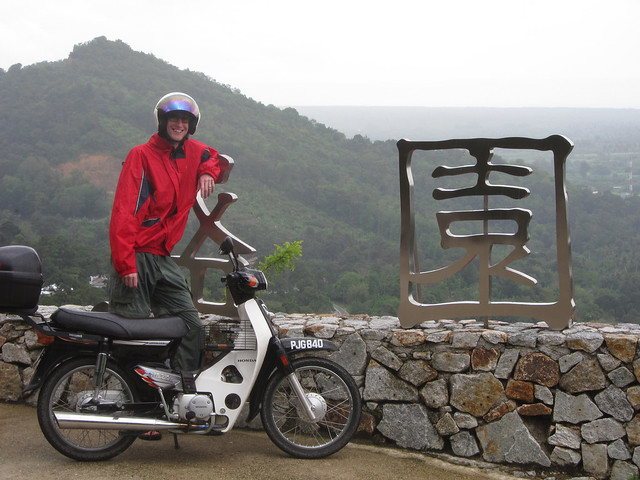
No horse for me, but a 'moto' proves the next-best way to traverse Penang.
Romantics like myself, comparing our experiences to those of people like Isabella Bird, sometimes complain that contemporary travel is stale. That the world has grown too small, too quickly, and that "alien experiences" are few and far between. That there is nothing new to witness, or discover on this planet. That we are living at the wrong time for "interesting" journeys.
Justin Bieber--of all people--reminds me that such claims are wrong.
Such claims are wrong because never, at any other point in history, has Isabella Bird or any other traveler been able to experience what I did in Sungai Batu. Never before, in Malaysia or anywhere else, has Bieber followed the call to prayer. We are living at a time of fantastic temporo-cultural juxtaposition, and while one can experience this juxtaposition anywhere, it is only by traveling that one starts to grasp the extent of the "mashup" that is occurring around the world, and perhaps gain some new perspective for what it all means.
An American like me, for instance, might see mosques being built in New York as a kind of "invasion." In Malaysia, though, we find a new normal: one in which mosques are everywhere and Muslims make the law. We may be put at ease to hear familiar pop music playing outside our hotel window after the Adhan, but being in Malaysia, it's impossible to ignore the notion that the Malay woman in a hijab eating breakfast next to us probably views the whole situation—from New York to Bieber—completely reversed.
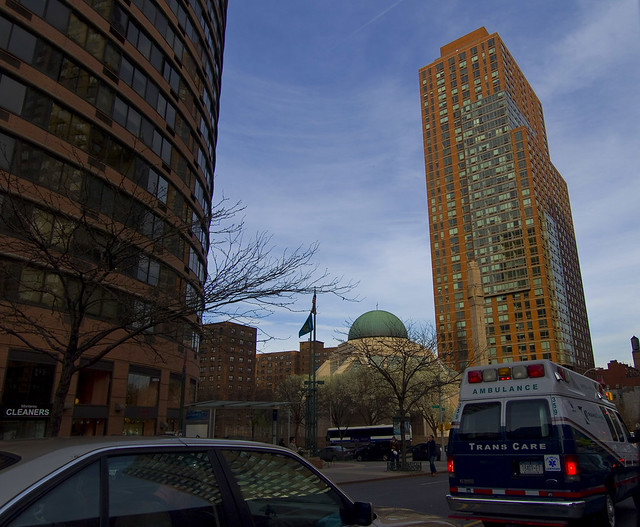
A mosque in NYC.
Bieber aside, there is a deeper level at which listening to the Adhan in Malaysia is fascinating. It is fascinating because five times a day, in the heart of Southeast Asia, one can stop and listen to to the ebb and flow of Arabic verse conceived hundreds of years ago in an alien culture located half way around the world. And that is just the beginning of this country's astounding multicultural heritage. Pick a street in Georgetown or Malacca, and you've got a pretty good chance of being able to walk by a mosque (built by Malays, Arabs, or Indians), Buddhist temple (built by Chinese), Hindu temple (built by Indians), church (built by Chinese, Indians, or European settlers), and colonial fortress within the space of one or two city blocks... all of them but the fortress alive and active with worshipers.
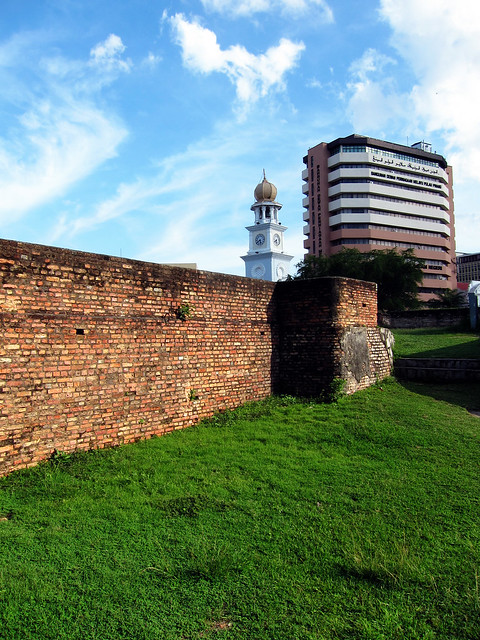
Fort Cornwallis was present in Georgetown long before Ms. Bird. visited... the clock tower behind was built soon after she left to commemorate Queen Victoria's 1897 Jubilee.
Only fifty percent of Malaysia's population is in fact comprised of ethnic Malays... and the Malays themselves are not indigenous to the peninsula or Borneo. Ten percent of the population is indigenous, with the rest being of Chinese or Indian descent... the offspring of generations of immigrants who came to work the tin mines, plant the fields, and set up business--many of whom were "shipped in" by the British.
The citizens of Malaysia are governed by two courts: one which handles all secular cases, and everything related to the ethnic Chinese and Indian populations, and another--the Islamic Sharia court, imported from Arabia--which governs the Malays, who are Muslim by ethno-religious state definition. The majority of political power is held by Malays, while the majority of the country's wealth is held by ethnic Chinese, and the majority of laborers are ethnic Indians.
In short, Malaysia is one of the most heterogeneously multicultural countries in the world. Cultures have been colliding here for a very long time. In fact, the more I saw of Malaysia, the more I realized that--Bieber notwithstanding--I was encountering many of the same things that Isabella Bird had encountered over a hundred years ago, from the cultural juxtaposition, to the friendly people, to the lush open jungle, to the equatorial heat, to the amazing variety of delicious foods.
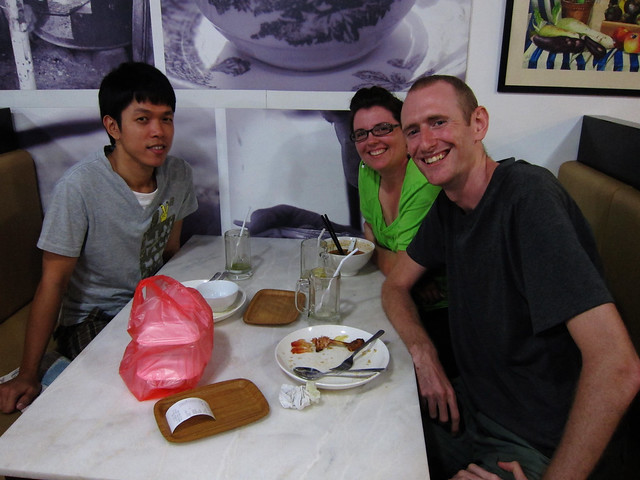
Having dinner with Kian--a Malaysian of Chinese descent who hosted us for two nights in Ipoh.
Most importantly, my journey was similar to Isabella's in the way that all journeys will always be similar: we both encountered something of what a particular place is like right now (which of course includes something of what it was like in the past).
As far as I can tell, the world is always changing. We gain some things, and we lose some things, but I think it's important not to be too nostalgic about the past, not to privilege getting to see an "uncorrupted" culture over getting to hear Justin Bieber play in a small town in Asia. Because those uncorrupted cultures never really existed; culture is a discussion, and we've all been having it for a very long time. I tend to agree with what Ovid said some two-thousand years ago: Omnia mutantur, nihil interit ("everything changes, but nothing is truly lost"). People like myself complain about the world getting smaller, but I think that we're humbugs and liars, because the world, if anything, is getting bigger. Go back a hundred years, and ask yourself how likely it is that you would have had the resources (or inclination) to travel out of your home country. Now ask yourself how likely it is that those villagers in Sungai Batu would have had the resources to travel out of theirs. All of us get to experience more cultural diversity now, in the twenty-first century, than we ever could have hoped to do at any point the past.
I think there is room for a mitigated skepticism in all areas of life, and I think that, in the coming decades and centuries, it is imperative that people take strong stands to safeguard the precious parts of their cultures, because there is a danger that some precious parts may be washed away. But that doesn't make the wave inherently bad, nor does it make travel in the contemporary world "boring." On the contrary: every day, all over the world, more people than ever before are coming into contact with new modes of thinking, new forms of living, new ways to be who they are, and new ways to be who they aren't... are coming into contact with people and styles and ideas that their parents never could have imagined. People are trying to figure out what to keep and what to throw out, trying to decide what's valuable and what's trash, trying to change and trying to stay the same. Sometimes it's ugly, sometimes it's violent, sometimes it sounds like a prepubescent pop singer I really wish would go away... but as I sit here in Kuala Lumpur listening to the Korean pop megahit "Nobody" play in the background, with an amazing sampling of Indian food in front of me, at a hole-in-the-wall restaurant that sports a large "like us on Facebook" sticker on the wall... I am reminded that most of the time it's just messy, and crazy, and a whole lot of fun watch--and be a part of.
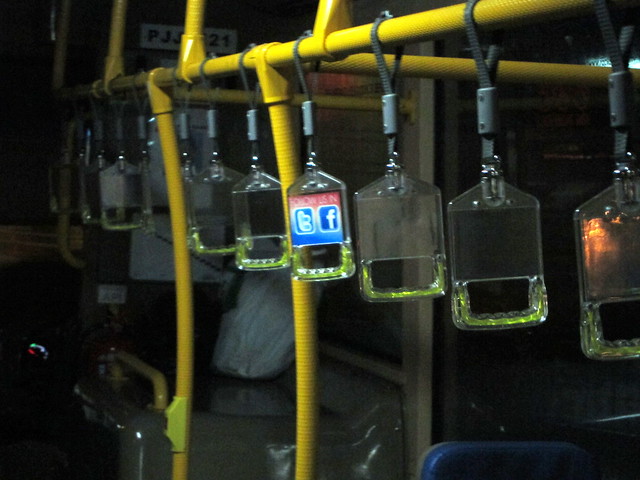
Social networking advertised on a city bus we took from Sungai Batu to Georgetown.
Related slideshows:
I have finished my much anticipated Cambodia scrapbook. Much anticipated mostly by me, and then by the people who read about my failed Vietnam book. This is my favorite book I've made so far mostly because we had such nice photos and I figured out how to make realistic glitter. And it's glitter even Mom approves of because it leaves no mess.
